How Digital Transformation Is Reshaping GCC Classrooms
In the vibrant classrooms of the Gulf Cooperation Council (GCC), where the hum of innovation echoes against the backdrop of rapid economic diversification, a profound shift is unfolding.
Picture a student in Abu Dhabi using AI to simulate sustainable urban planning. Or a learner in Riyadh accessing personalized coding modules via a mobile app, experiences that were once futuristic are now everyday realities.
As the GCC grapples with a youth bulge where over 60% of the population is under 30, digital transformation in education is not merely an upgrade. It’s a strategic imperative to build a resilient, knowledge-based economy.
The GCC EdTech market, valued at approximately USD 3.2 billion in early 2025, is on track to expand at a CAGR of 6.74% through 2030. This growth is fueled by investments in AI, cloud-based platforms, and hybrid learning models.
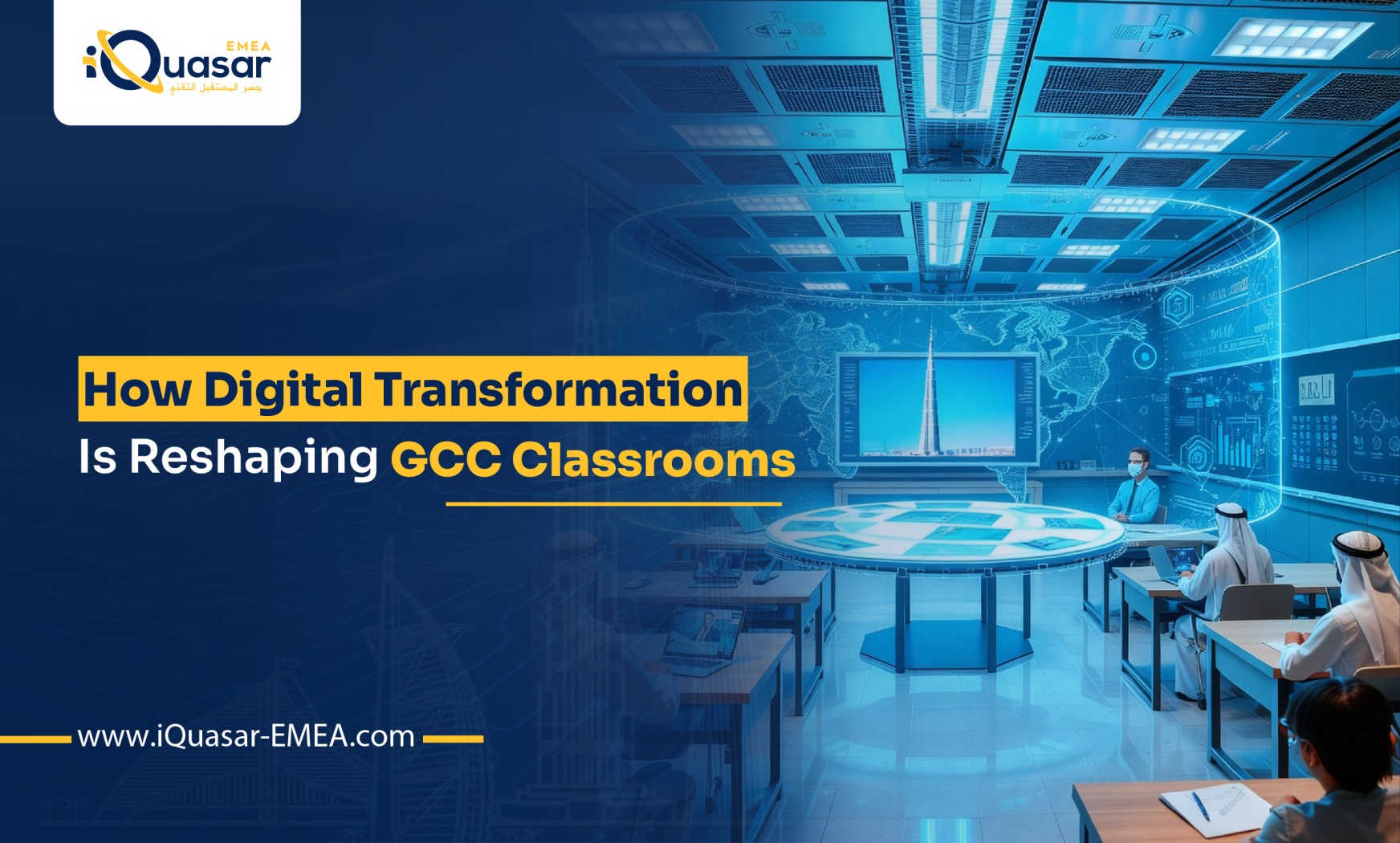
This blog explores how these changes are redefining teaching and learning across the region.
At its core, digital transformation in GCC classrooms is about democratizing access to personalized, skill-centric education.
It aligns with national visions like Saudi Arabia’s Vision 2030 and the UAE’s UAE Centennial 2071. By embedding technologies such as AI-driven adaptive learning and virtual reality (VR) simulations, educators are shifting from rote memorization.
Instead, they’re fostering critical thinking, creativity, and digital fluency, essential for a workforce projected to add 1 million students to higher education by 2030.
This evolution ensures that GCC youth, who represent 78% of the workforce in countries like Saudi Arabia, are equipped for high-demand sectors like renewable energy and fintech.
In essence, classrooms are turning into incubators for tomorrow’s innovators.
Government-Led Initiatives Driving Adoption
GCC governments are at the forefront, allocating billions to integrate digital tools into curricula.
The UAE’s mandatory AI education program, rolled out across all government schools in 2025, introduces concepts from ethics to machine learning starting in kindergarten.
Similarly, Saudi Arabia launched a nationwide AI curriculum for public schools in the 2025-2026 academic year. It emphasizes practical applications in STEM.
Qatar‘s Education Above All Foundation has expanded its digital platforms. They’re partnering with global tech firms to provide free AI literacy courses.
Meanwhile, Bahrain and Oman focus on national e-learning portals to bridge urban-rural divides.
Emerging Technologies Enhancing Engagement
Technologies like AI tutors, gamification, and AR/VR are making learning interactive and inclusive.
- AI adaptive platforms personalize content for diverse learners.
- VR enables immersive experiences, such as virtual field trips to historical sites in Kuwait or environmental simulations in Oman.
- Cloud-based collaboration tools, integrated with social media for micro learning, capitalize on 95%+ smartphone penetration in the UAE and Qatar.
These tools are transforming passive lessons into dynamic, engaging sessions.
Tangible Benefits for Students and Educators
These shifts boost engagement, with gamified learning improving retention by up to 50%. They also free teachers for higher value mentoring.
They promote equity, too. For instance, voice-assisted tools support students with disabilities. Pilot programs have reduced dropout rates by 20%.
Overall, digital tools enhance motivation, flexibility, and interdisciplinary skills for a future-ready workforce.
Persistent Challenges and Mitigation Strategies
Despite progress, hurdles like digital divides in rural areas, teacher upskilling gaps, and cybersecurity risks persist.
Low digital literacy affects 30% of educators. Infrastructure lags in less urbanized regions exacerbate inequalities.
Solutions include:
- Targeted training via platforms like FutureX in Saudi Arabia.
- Increased FDI in local EdTech startups to build robust infrastructure.
Addressing these proactively will ensure inclusive growth.
Digital transformation is not just reshaping GCC classrooms; it’s empowering a generation to lead an AI-driven world.
It’s bridging gaps in access and skills while honoring cultural roots through localized innovations. As investments surge toward USD 27 billion regionally by 2033, the focus must remain on equitable implementation to maximize these gains.
For educators, policymakers, and parents, the opportunity is now: embrace these tools to cultivate resilient learners.
Ready to drive your organization’s digital transformation in the GCC? Partner with iQuasar EMEA for tailored IT solutions in AI, cloud computing, and hybrid environments that support innovative initiatives across sectors. Visit https://iquasar-emea.com/ today to explore our services and schedule a consultation.